ちはやぶる神代もきかず竜田川からくれなゐに水くくるとは
在原業平 Ariwara no Narihira (825–880), 古今和歌集 Kokin Wakashū no. 294 (compiled c. 905); also 小倉百人一首 no. 17
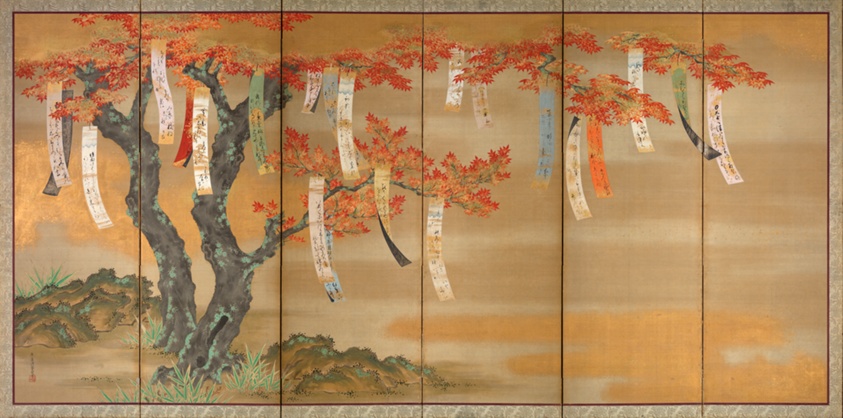
Narihira's poem was born in front of a painting: the Kokinshū headnote records it as a screen poem, composed before painted maple leaves drifting down the Tatsuta River in the chambers of the future Empress Nijō. Eight centuries later, Mitsuoki closes the circle — on his screen the poems themselves hang from the tree, tanzaku knotted to the maple's branches, verse returned to the wood that occasioned it. No Kyoto viewer of 1675 could see red maples and poem slips without hearing the most famous maple poem in the language, its river dyed a crimson unheard of even in the age of gods. The room opens here because here the answering is literal.
業平此歌,原是屏風歌——《古今集》詞書記載,二條后宮中有屏風畫紅葉流於龍田川,業平對畫詠之。八百年後,光起將此緣收攏成環:他畫的屏風上,詩箋以繩繫於楓枝,歌真的回到了樹上。一六七五年的京都,無人見紅楓詩箋而不聞此歌——神代未聞的唐紅,正流轉於滿屏金地之間。和韻一室,由此開卷。
Kyoto, around 1675. Mitsuoki — head of the revived imperial painting office since 1654 — worked this screen in ink, mineral color, gold leaf, and gold dust on silk; the painted slips carry real seasonal waka quoted from twelfth- and thirteenth-century anthologies, brushed in courtly hands. He chose not the party but the hour after it: the revelers gone, the slips left fluttering, soon to fall with the leaves they are tied to. The pair — its companion a cherry in full spring bloom — was commissioned by or given to Tōfukumon'in, the shogun's daughter who became empress.
京都,一六七五年前後。光起自一六五四年起重掌宮廷繪所,絹上敷金箔、灑金泥;箋上所錄,是十二、十三世紀歌集中的四季和歌,筆致出自宮廷之手。他畫的不是宴遊之盛,而是人散之後——風過金地,詩箋斜懸,將隨紅葉一同離枝。這對屏風(另一扇畫春櫻滿開),或為東福門院所命,或為獻於她——德川將軍之女,入宮而為天皇之后。
In 1615 the shogunate's Regulations for the Imperial Court fenced the Kyoto palace out of politics; culture was the sovereignty it had left. Emperor Gomizunoo and Tōfukumon'in — a marriage that was itself an instrument of Tokugawa control — answered with a deliberate renaissance of Heian taste, and Mitsuoki's Tosa school, restored to the court painting office after nearly a century in eclipse, was its brush. The same long peace put woodblock-printed classics and Hyakunin Isshu cards into townspeople's hands and sent them out on momiji-gari picnics, so that by 1675 Narihira's crimson river was on everyone's lips. Nostalgia here is not retreat; it is a court holding the one territory no shogun could confiscate.
一六一五年《禁中並公家諸法度》頒下,幕府將京都朝廷圈出政治之外;宮中所餘的疆土,唯有文化。後水尾天皇與東福門院——這樁婚事本是德川氏羈縻皇室之策——卻在宮中掀起一場刻意的王朝復興;土佐家中絕近百年,至光起重返繪所,執其筆。同一個太平之世,坊間刻本流布,歌牌入戶,賞楓成遊,業平的唐紅川水早已人人上口。懷古並非退避,而是朝廷據守幕府奪不走的最後版圖。